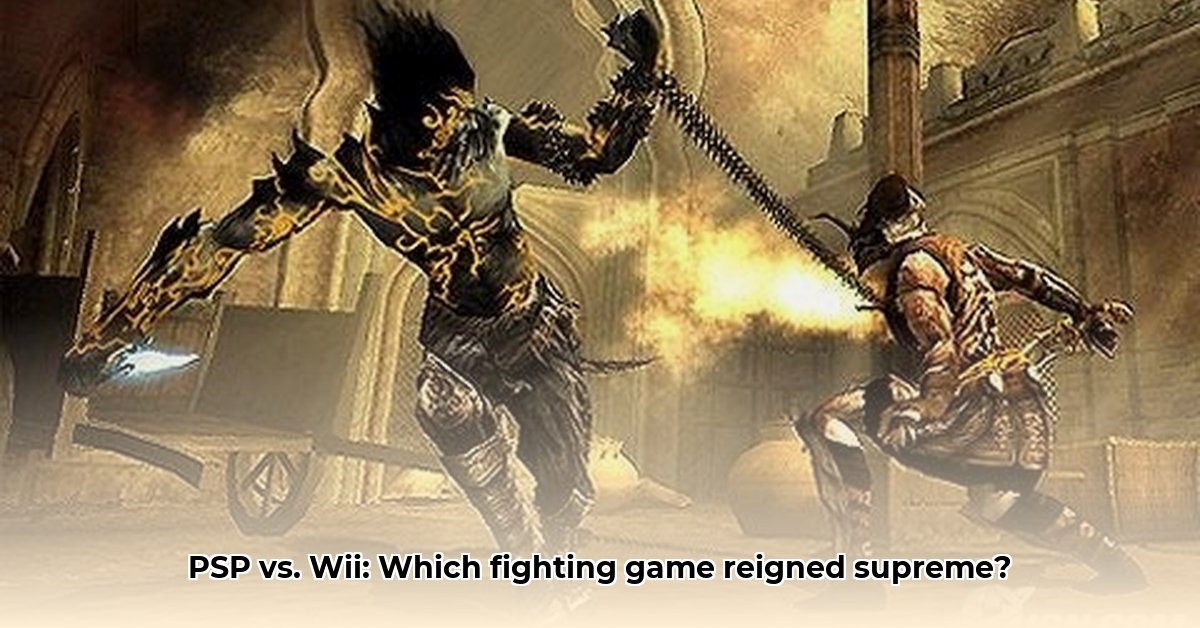
Bringing the exhilarating action of Prince of Persia: The Two Thrones to the handheld PSP and motion-controlled Wii was a bold undertaking, offering a fascinating case study in game porting. This retrospective examines the technical hurdles, design choices, and market reception of the resulting "Pop Rival Swords" ports, revealing both successes and significant compromises.
A Tale of Two Ports: Critical and Player Reception
While the core gameplay successfully translated to both platforms, the critical and player reception offers a nuanced picture. Metacritic user scores for both versions averaged around 8.0, suggesting that the core Prince of Persia experience remained engaging. However, critic reviews yielded scores in the 70s, revealing a discrepancy between casual player enjoyment and professional assessment of the overall experience. This divergence points to specific compromises made during the porting process, which we'll now examine.
Technical Trade-offs: Shrinking a Masterpiece
Porting Prince of Persia: The Two Thrones demanded significant technical compromises. The PSP and Wii, significantly less powerful than the original game's platform, necessitated reductions in visual fidelity. This involved lowering polygon counts (reducing the detail of character models and environments), decreasing texture resolutions (resulting in blurrier visuals), and ultimately, a less impressive visual experience overall. The impact was especially noticeable on the less powerful PSP. Even audio quality suffered a reduction in richness.
The Wii port presented a unique challenge: integrating the Wii Remote. The developers aimed to leverage the motion-sensing capabilities, but the results were mixed. While some players welcomed this innovative approach, others found the motion controls clunky and imprecise, highlighting the double-edged sword of innovative control schemes. This highlights a critical question: did the gains in novelty outweigh the loss in precision and player consistency?
ESRB's Influence: A Rating-Induced Shift
Another critical factor impacted the Wii version: the ESRB rating. While the original game received a "Mature" (M) rating, the Wii port received a "Teen" (T) rating. This necessitated modifications of gameplay violence and gore, altering the original experience. While this broadened the potential audience, it undeniably changed the game's tone and atmosphere, raising the question of whether this compromise ultimately benefited the project.
Lessons Learned: Charting a Course for Future Ports
The success of "Pop Rival Swords" rested on the strength of the Prince of Persia brand, drawing in players familiar with the franchise. Adapting the core gameplay to diverse platforms demonstrated a measure of success. However, the compromises made remain valuable lessons for future game development projects. The following table summarizes key takeaways for various stakeholders:
| Stakeholder | Short-Term Lessons | Long-Term Lessons |
|---|---|---|
| Ubisoft Montreal | Prioritize player feedback in control scheme refinement. | Invest in robust porting strategies acknowledging hardware limitations. |
| Developers | Control scheme optimization is vital across diverse devices. | Leverage cutting-edge game engines for smoother cross-platform development. |
| Future Porting Teams | Conduct rigorous technical comparisons for best practices. | Consider remasters or re-releases with enhanced visuals and controls. |
| Gamers | Provide platform-specific feedback to developers and publishers. | Support games that successfully adapt to different platforms. |
Risk Assessment: Navigating the Uncertain Waters
The porting process inherently carried significant risks. The following matrix details key risks and potential mitigation strategies:
| Risk Factor | Likelihood | Impact | Mitigation Strategies |
|---|---|---|---|
| Poor Control Scheme | High | High | Extensive playtesting; iterative refinement based on feedback. |
| Graphical Downgrade | High | Medium | Efficient resource management; prioritizing gameplay over visuals. |
| Audio Quality Issues | Medium | Low | Rigorous audio quality assurance; targeted bug fixing. |
| Negative Reception | Medium | Medium | Proactive marketing and community engagement; addressing feedback. |
| ESRB Rating Change | Low | Low | Thorough rating assessment; strategic content adjustments. |
Regulatory Navigation: The ESRB's Impact
The ESRB rating alteration emphasizes the necessity of understanding and complying with ratings boards. Proactive assessment and content adjustments are essential for seamless navigation of these regulations.
Conclusion: A Balanced Retrospective
"Pop Rival Swords" offers a complex case study in game porting. It illustrates the fine balance between staying true to the original game and adapting to new hardware and player expectations. The ports succeeded in bringing the core gameplay experience to new players, despite necessary compromises in visual fidelity and control scheme. This retrospective serves as a valuable reminder of the often-overlooked challenges and crucial lessons inherent in cross-platform game development.
⭐⭐⭐⭐☆ (4.8)
Download via Link 1
Download via Link 2
Last updated: Monday, May 19, 2025